
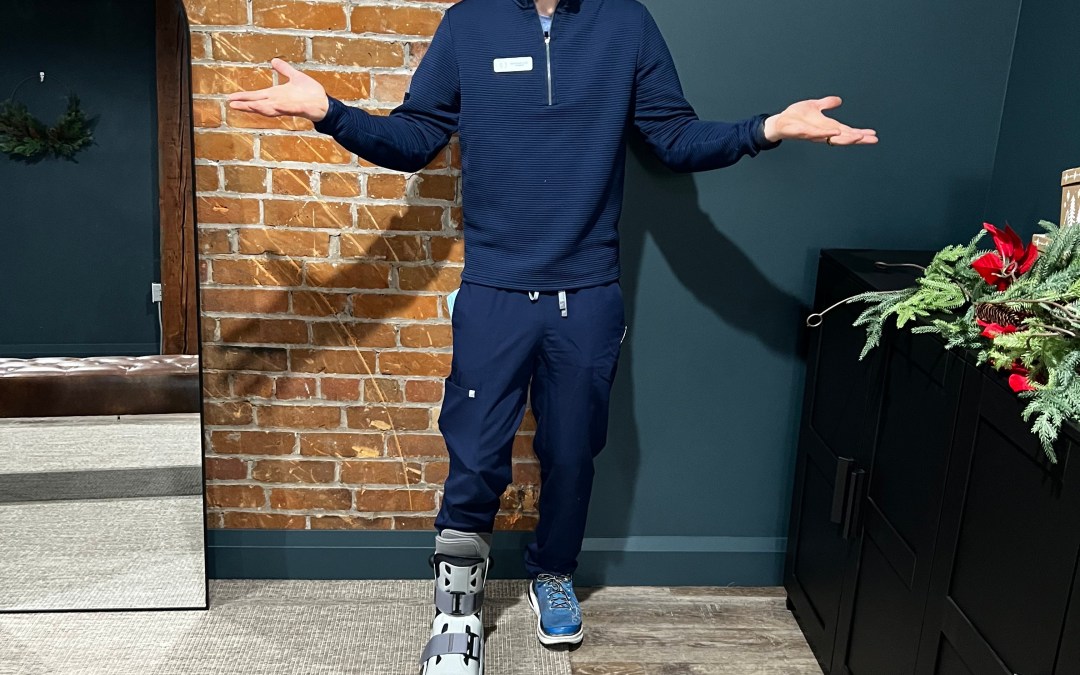
As a chiropodist with over 27 years of experience, I’ve dedicated my career to helping people stay upright, comfortable, and walking out of my clinic better than they came in. But recently, fate played a little trick on me. In a plot twist worthy of a sitcom, I ended up with one of the very conditions I’ve spent my life treating: a Pseudo Jones fracture. That’s right — the foot specialist broke his own foot. Somewhere out there, the universe is having a good laugh.
What Exactly Is a Pseudo Jones Fracture?

For those unfamiliar with the intricacies of foot anatomy (which, let’s be honest, is most of you), a Pseudo Jones fracture, also known as an avulsion fracture, is a break at the base of the fifth metatarsal. This is the long bone on the outside of your foot that connects to your pinky toe.
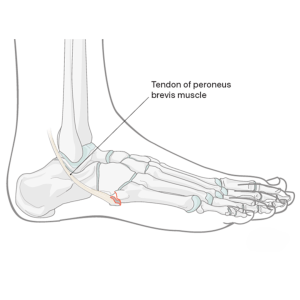
Here’s the science-y breakdown:
- The peroneus brevis tendon, which helps stabilize your foot and ankle, attaches to this area of the bone.
- When this tendon is subjected to a sudden twist or misstep, it can pull so forcefully that it takes a small piece of the bone with it.
Think of it as the tendon saying, “If I’m going down, I’m taking you with me!”
Unlike its dramatic cousin, the Jones fracture, the Pseudo Jones fracture is more practical and, thankfully, less complicated. It’s typically treated with conservative methods like immobilization and rest. But that doesn’t make it any less irritating – it’s no walk in the park!
The Irony of My Injury
Here’s where the comedy really kicks in. Less than 30 minutes before my mishap, I was sprinting at top speed, channeling my inner superhero. Decades of training for masters track and field, countless obstacle course races, and hours of weightlifting left me unscathed. Sure, I’ve dealt with the occasional soft tissue injury, but I’ve always recovered.
But stepping off a curb? That’s apparently my Kryptonite. One awkward step, one twist of the ankle, and here I am, strapped into a cast boot, trying to keep my dignity intact. Suddenly, I was the patient. It’s as if my foot decided to revolt: “Oh, you think you’re invincible? Let’s see you handle this!”
From Chiropodist to Patient
Imagine a chef burning their tongue on soup or a dentist with a cavity. Now picture me, a chiropodist, clunking around The Foot Health Centre in my cast boot like a stormtrooper who forgot his training manual. My patients and colleagues had a field day with it:
- “Guess you wanted to understand our pain better, huh?”
- “Chiropodist, heal thyself!”
- “Is this some kind of hands-on—or should I say feet-on—research?”
- “Well, at least now I feel better about my problem!”
The jokes came thick and fast, but laughter turned out to be the best medicine (at least for my ego). And honestly, it’s been humbling. If nothing else, I’ve learned a few valuable lessons.
Lessons Learned (and Reinforced) From a Pseudo Jones Fracture
- The RICE Method Really Works. Rest, Ice, Compression, and Elevation. Yes, I’ve been practicing what I preach, and it does make a difference.
- Cast Boots Are Humbling and a Necessary Evil. They’re protective, sure, but they turn every staircase into a test of bravery and balance. Check out our guide to choosing the right cast boot
- Empathy Is Key When patients see their doctor literally walking (or hobbling) a mile in their shoes – or at least trying – it creates a connection that no textbook can teach.
Finding the Silver Lining
This experience, while inconvenient, has given me a fresh perspective. I now truly understand what it feels like to be sidelined by a foot injury. I’ve stumbled — quite literally — into a deeper sense of empathy for my patients. While my fracture has temporarily slowed me down for the next 4-8 weeks, it’s also made me a better chiropodist.
Frequently Asked Questions
What are the symptoms of a Pseudo Jones fracture?
Symptoms include swelling, pain on the outside of the foot, and difficulty bearing weight. Immediate medical evaluation is recommended.
How long does it take to recover from a Pseudo Jones fracture?
Recovery typically takes 4-8 weeks with proper rest and immobilization.
Can you walk with a Pseudo Jones fracture?
It’s not advised without medical support, as it may worsen the injury.
Final Thoughts
To my fellow chiropodists: Watch your step—no one’s immune, not even the pros. And to my patients: Rest assured, your chiropodist knows exactly where you’re coming from—literally.
Have questions about foot health or injury recovery? Contact us today to schedule a consultation!
Now, if you’ll excuse me, I need to ice my foot, tighten my cast boot, and contemplate whether I’ll ever trust a curb again. One step at a time, as they say!
Here’s to Walking One Step at A Time (and avoiding curbs…)
Mark Smyth, D.Ch.
Chiropodist
Contact Us
If you’re experiencing pain or discomfort in your feet, our team of Chiropodists at The Foot Health Centre is here to help. We offer personalized treatment plans tailored to your individual needs, focusing on relieving symptoms and promoting foot health.
Contact us today to schedule a consultation and take the first step toward effective foot health!