
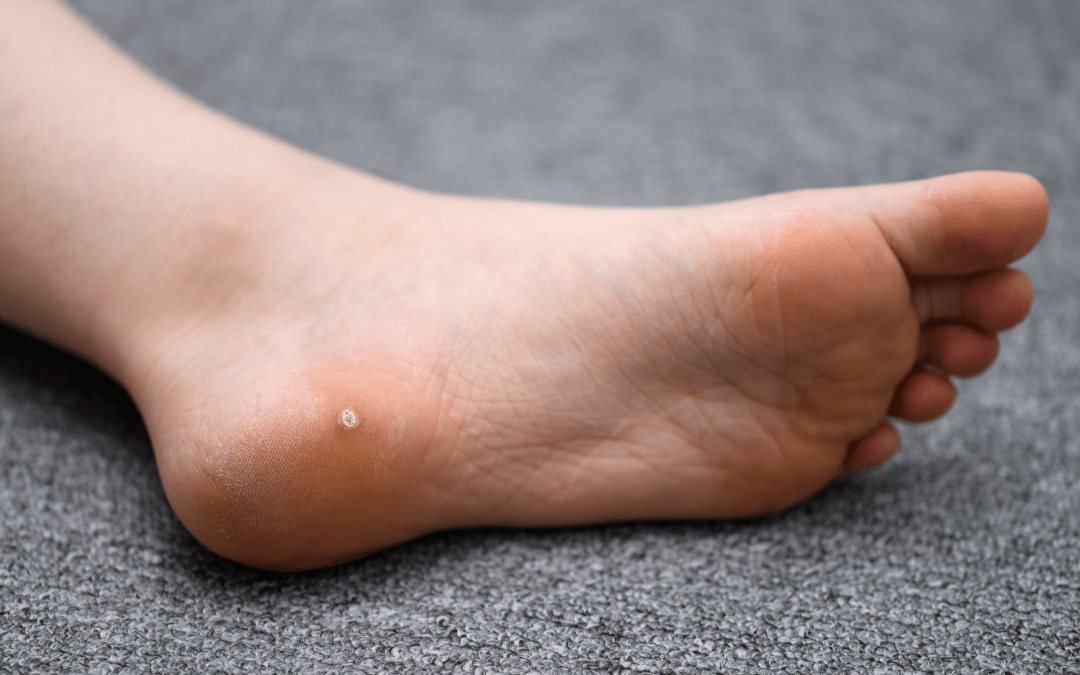
What Causes Warts on Your Feet?
Warts on your feet tend to show up when the virus sneaks into your skin through tiny cuts or scrapes (think public showers or pool areas). Once the virus is in, a wart can develop. The good news? It’s not due to poor hygiene or anything you’ve done wrong. The bad news? Warts can stick around for a while.
What Do Warts on Your Feet Look Like?
Warts on your feet can vary in appearance, keeping things interesting (and not in a good way). Here’s a breakdown of the most common types:
- Plantar Warts: These appear on the bottom of your feet, feeling like you’re stepping on a small, painful pebble. The term “plantar” means “bottom”.
- Mosaic Warts: Formed in clusters, they create a “mosaic” pattern. While not a work of art, they are common on the feet.
- Flat Warts: These are smooth, flat, and typically painless. They’re the “chill” wart of the bunch—if that’s possible!
Wart or Corn on Your Feet: How to Tell?
Warts and corns are both common issues on the feet, but how do you tell them apart? Here’s a quick tip:
- Warts on Your Feet: Squeeze the sides, and if it hurts, it’s likely a wart.
- Corn: Press directly on it. If it’s painful, it’s probably a corn.
It’s like a pinch versus a poke—a small difference that helps you identify what’s bothering your feet.
Can Warts on Feet Go Away on Their Own?
Sometimes, warts on feet can disappear on their own, especially in children. But for adults, warts can be more persistent, hanging around longer than you’d like. If waiting isn’t your style, there are effective treatment options.
Effective Treatment Options for Warts on Your Feet
Here’s are a few common treatment methods used by chiropodists at The Foot Health Centre to get rid of warts on your feet, with proven methods:
- Drug Store Treatments: Over-the-counter options work by peeling away layers of the wart. They are slow, but can be effective on some warts.
- Acidic Medication: Certain acidic medications applied in-office by a chiropodist can gently remove warts on your feet without damaging surrounding skin.
- Immunosuppressant and Salicylic Acid Combo: A topical immunosuppressant medication stops the wart from growing, while salicylic acid softens it for easier removal. This treatment is commonly prescribed by a chiropodist.
- Needling Treatment: Needling involves freezing the area and poking the wart to stimulate an immune response. Think of it as a memo to your immune system: “Time to get rid of this wart!”
Why Do Warts on Your Feet Sometimes Come Back?
Like that pesky mosquito that sneaks into your room, warts on your feet can come back after treatment. This happens because the virus can linger in your skin, ready to reappear. To reduce the risk of recurrence, focus on a healthy lifestyle to keep your immune system strong.
When to See a Chiropodist for Warts on Your Feet
If warts on your feet are causing pain or multiplying quickly, it’s time to see a chiropodist. They can help with the best treatment plan and provide tips for keeping your feet wart-free.
Warts on your feet may be stubborn, but you don’t have to live with them forever. With patience and the right treatment, you can send these nuisances packing. And remember, you’re not alone—people have dealt with these bothersome bumps for centuries! Feel free to share your wart concerns (and maybe a few jokes) with your chiropodist at The Foot Health Centre in Cobourg, Ontario –we’re here to help.
Contact Us
If you’re experiencing pain or discomfort in your feet, our team of Chiropodists at The Foot Health Centre is here to help. We offer personalized treatment plans tailored to your individual needs, focusing on relieving symptoms and promoting foot health.
Contact us today to schedule a consultation and take the first step toward effective foot health!